
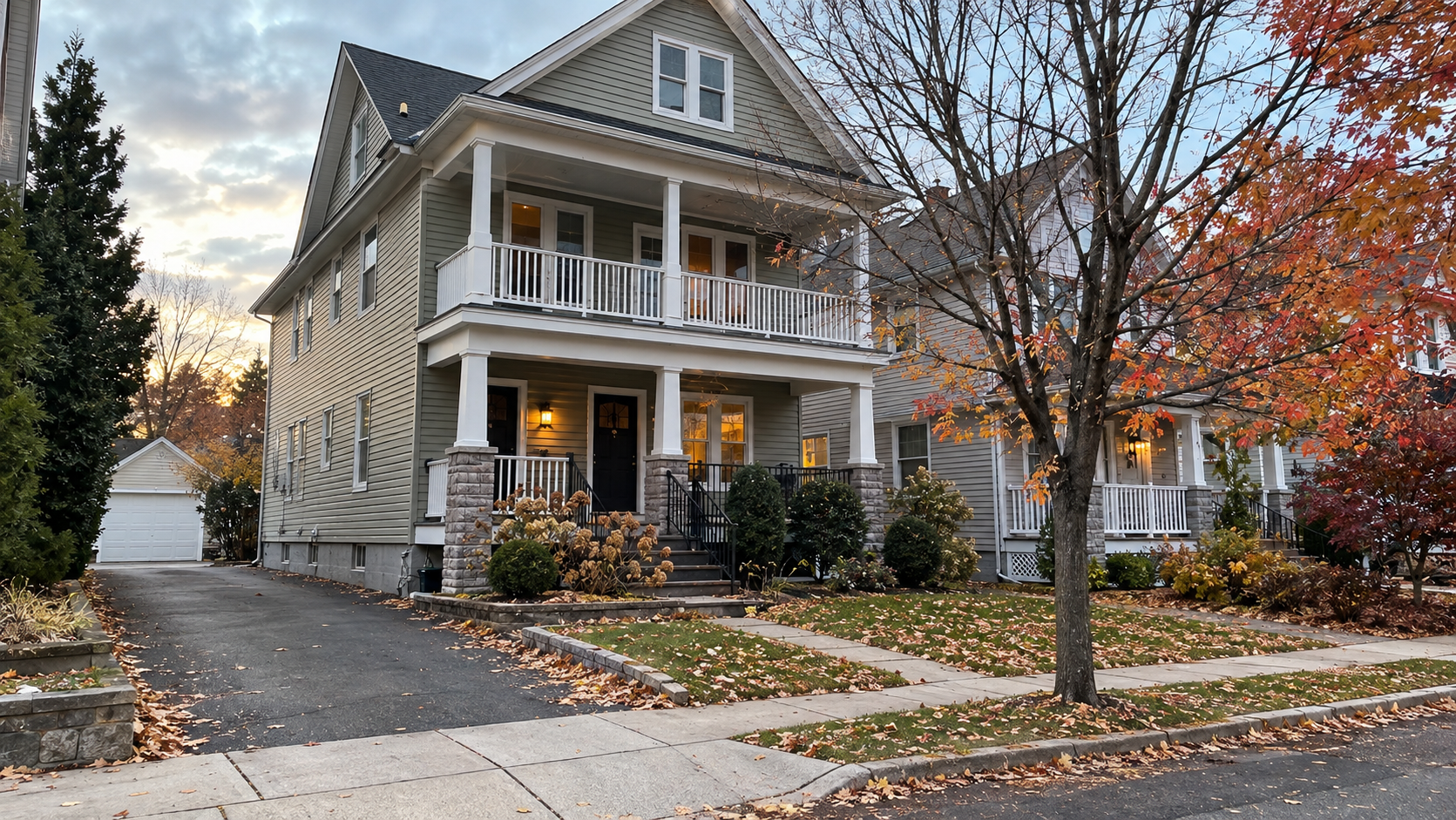
When most people think about buying real estate, November and December aren't usually the first months that come to mind. Between Thanksgiving, holiday shopping, family gatherings, and year-end commitments, buying a property often takes a back seat.
But for real estate investors, the final two months of the year can present opportunities worth exploring.
Whether you're looking for your first rental property, considering a multifamily investment, or expanding an existing portfolio, there's a good reason to keep an eye on the North Jersey housing market as 2026 comes to a close.
What Happens to the Housing Market in November and December?
Real estate has always been seasonal. Spring and summer traditionally bring more listings, more showings, and greater buyer activity. As temperatures drop and the holidays approach, the market generally slows.
According to the National Association of Realtors (NAR), historical existing-home sales typically decline approximately 9.6% from October to November. Interestingly, December sales have historically increased about 3.9% compared to November.
That doesn't mean December suddenly becomes a hot market. Many December closings involve contracts negotiated weeks earlier.
What makes this season interesting is the changing balance between buyers and sellers.
NAR also reports that December typically has the lowest housing inventory of the year. Fewer homes are available, but there may also be fewer buyers actively competing for them.
For investors who are prepared to act, that combination can create opportunities that aren't always available during the busier spring market.
Less Competition Can Mean More Room to Negotiate
One of the biggest challenges real estate investors face in North Jersey is competition.
In communities throughout Bergen, Passaic, and Morris counties, desirable properties can attract interest from traditional homebuyers and investors alike.
During the spring market, that competition can lead to multiple offers, quick decisions, and limited negotiating flexibility.
November and December can look different.
Some buyers put their searches on hold until after the holidays. Others prefer not to deal with moving during the winter.
An investor who isn't working around a school calendar or a particular moving date may have more flexibility.
That doesn't automatically mean lower prices. Well-priced properties in desirable locations can still attract strong offers.
But with fewer competing buyers, there may be opportunities to negotiate on price, inspection issues, closing dates, or other terms.
And sometimes, the terms of a transaction can be just as valuable as the purchase price.
Some Sellers Have Reasons to Close Before December 31st
Not every homeowner wants to wait until spring.
Some sellers have already purchased another home. Others are relocating for work, settling an estate, or simply ready to move on from a property they've been trying to sell.
For certain sellers, completing the transaction before the new year may be an important goal.
This is where investors can have an advantage.
An investor with financing in place, a clear understanding of the property's value, and flexibility around the closing date may be able to offer terms that appeal to a motivated seller.
Consider a property that's been listed since late summer.
The seller may have started with expectations shaped by the busy spring market. By November, after several months without a successful sale, they may be more willing to consider a reasonable offer.
Of course, a property sitting on the market doesn't automatically make it a bargain.
The important question is why it hasn't sold.
Is it overpriced? Does it need repairs? Is there an issue with the location or layout? Or has it simply been overlooked?
Understanding the difference is where good research and experienced local representation become valuable.
Year-End Tax Planning Can Influence Investment Decisions
For some investors, purchasing property before December 31 is part of a broader financial strategy.
Rental properties may offer certain tax advantages, including deductions for eligible expenses and depreciation.
However, simply purchasing a property before year-end doesn't automatically create a tax benefit.
For example, the IRS generally requires a rental property to be ready and available for rent before depreciation can begin.
Investors who are selling one investment property and purchasing another may also be considering a 1031 exchange, which can allow qualifying capital gains taxes to be deferred.
These transactions have specific requirements and deadlines. December 31 is not a universal deadline for completing a 1031 exchange.
The takeaway is simple: Tax considerations can influence when an investor purchases property, but the financial decision should be made with guidance from a qualified tax professional.
A good investment should make financial sense beyond its potential tax advantages.
What Should Investors Look for in North Jersey?
Not every property makes a good investment, regardless of the season.
In areas like Wayne, Pequannock, Kinnelon, Montville, and surrounding North Jersey communities, investors should evaluate several factors before making an offer.
Rental demand: Is there a consistent market for tenants in the area? What are comparable properties actually renting for?
Property taxes: New Jersey property taxes can have a significant impact on monthly cash flow. A property that looks attractive based on purchase price alone may tell a different story once taxes are included.
Condition and maintenance: Older homes can offer opportunities, but renovation costs, major mechanical systems, and ongoing maintenance need to be factored into the investment.
Local regulations: Municipal rental requirements, zoning, and restrictions on multifamily use can vary from town to town. These should be reviewed before purchasing.
Long-term potential: Investors should consider more than immediate rental income. Location, resale appeal, and the property's ability to remain competitive over time all matter.
The goal isn't simply to find a property at a lower price. It's to find a property that works financially.
Should Investors Buy Before the End of 2026 or Wait Until 2027?
That's the question worth asking.
New Jersey's housing market has shown some signs of improving inventory in 2026.
According to New Jersey Realtors, the number of homes available for sale in September increased 12.1% compared to the previous year. At the same time, the statewide median sales price rose 2.8% to $550,000.
More inventory is encouraging for buyers, but it doesn't necessarily mean prices are falling.
For investors, waiting until spring 2027 could mean having more properties to choose from. It could also mean facing greater competition as traditional buyers return to the market.
Buying during November or December may offer a different advantage: the chance to evaluate properties when fewer buyers are actively searching.
Neither approach is automatically better.
An investor with a clear budget, reliable financing, and specific investment goals may find a worthwhile opportunity before the year ends.
Someone who hasn't established those fundamentals may be better served by preparing now and continuing the search into 2027.
The calendar should never be the deciding factor. The numbers should.
Final Thoughts
The North Jersey real estate market doesn't shut down when the holidays arrive.
While November and December are traditionally quieter months, motivated sellers, reduced competition, and year-end financial considerations can create opportunities for investors who know what they're looking for.
That doesn't mean every property is a deal or that investors should rush to close before December 31.
It means there's value in staying active, understanding local market conditions, and being ready when the right opportunity comes along.
If you're considering purchasing an investment property in Bergen, Passaic, or Morris County before the end of 2026, or you're planning ahead for 2027, I'd be happy to help you evaluate your options.